

Attending a Greek Orthodox Christening for the first time is an unforgettable experience. It's a ceremony that truly engages all the senses—rich with ancient chants, the scent of incense, and profound, time-honored traditions. Whether you’re a parent planning this beautiful day, a soon-to-be godparent, or a guest, this guide will walk you through the meaning behind this sacred rite of passage and the symbolic importance of the baptism robes worn.
We'll uncover how this ancient ceremony welcomes a new soul into the church, weaving deep spiritual significance with the warmth of a family celebration.
Your Journey Into the Greek Orthodox Christening

It’s helpful to think of a Greek Orthodox Christening less as a one-time event and more as the very first step on a lifelong spiritual path. It’s a powerful and moving sacrament where an individual is officially brought into the Christian faith and becomes a member of the Orthodox community. Far from being just a formality, this ceremony is a sacred initiation, packed with symbolic actions passed down through the centuries.
This sacrament, known as baptism, is a cornerstone of faith for millions worldwide, signifying spiritual cleansing, rebirth, and a formal welcome into the church. You can explore more about the global Orthodox Christian community through these membership figures from urbietorbicommunications.com.
The Foundation of Faith and Family
At its heart, the christening is a solemn promise made for the child by their parents and, most importantly, their godparents. The service itself is a beautiful tapestry woven from prayers, anointing with holy oil, and the pivotal moment of triple immersion in blessed water. Each of these steps is steeped in theology, symbolizing a death to the old self and a rebirth into a new life in Christ.
Getting familiar with these baptism ceremony traditions ahead of time will help you connect with the beauty and depth of the sacrament. We’ll guide you through every key moment, from the crucial role of the godparents to the symbolism of the white religious robe.
This ceremony is a foundational moment that unites the family and the church community in a shared promise to nurture the child’s spiritual growth. It establishes a bond that extends far beyond the day itself.
What to Expect on This Sacred Day
If you're preparing for or attending a Greek Orthodox Christening, you can look forward to several key rituals. These moments are not only visually stunning but also incredibly meaningful.
- Symbolic Attire: A central visual element is the specific baptism clothing. After being immersed in water, the child is dressed in pure white garments to symbolize their cleansed soul.
- The Role of Godparents: The godparents, known as the Nounos and Nouna, are absolutely central to the ceremony. They speak on the child’s behalf, renouncing evil and affirming the new faith.
- The Sacramental Actions: You'll witness the priest anointing the child with blessed oil (the Myron) and fully immersing them three times in the baptismal font.
This guide will demystify all these elements, helping you feel connected to every part of the service, from the opening prayers to the final joyful blessing.
The Meaning Behind Christening Symbols and Rituals
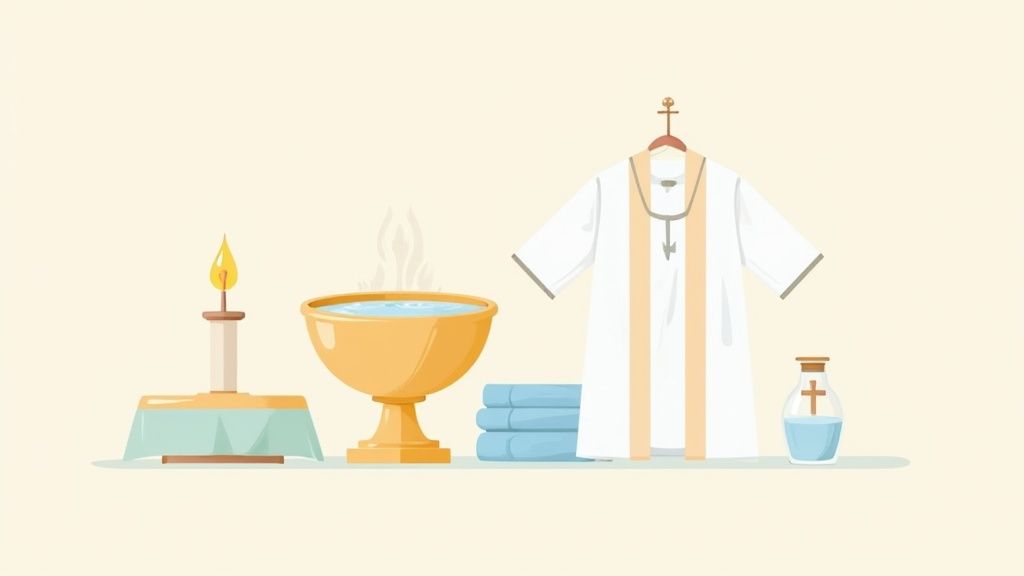
Every single object and action you see in a Greek Orthodox Christening is rich with meaning, a piece of a much larger, sacred story. It's not just a beautiful tradition; it's a series of physical acts that express profound spiritual truths as a new soul is welcomed into the church. To really understand the ceremony, you have to learn the language of its symbols.
Think of the baptismal font, for example. It isn't just a basin of water. It represents both a tomb and a womb—a powerful image that gets right to the heart of baptism. This is where the old, sinful self "dies" and is buried, and where a new spiritual life in Christ is born. This very transformation is the core of the entire sacrament.
The Sacred Anointing with Oil
Before the immersion in water, the priest anoints the person with blessed olive oil. He makes the sign of the cross on the child’s forehead, chest, back, hands, feet, ears, and mouth. This is a preparation, much like an ancient athlete would oil their body before a big contest. Spiritually, it prepares the individual for the lifelong "battle" against sin.
After the immersion, another, even more significant anointing takes place. This time, it's with Holy Myron, or Chrism. This isn't just any oil; it’s a special mixture consecrated by the Ecumenical Patriarch himself, containing olive oil and over 50 different aromatic essences. As the priest anoints the person, he declares, "The seal of the gift of the Holy Spirit."
This rite is known as Chrismation, the Orthodox equivalent of Confirmation. It’s the moment the Holy Spirit is bestowed upon the newly baptized, marking them forever as a protected member of Christ's flock.
The White Baptism Clothing and Robe
Once the newly illumined person emerges from the font, they are immediately dressed in pristine white baptism clothing. This is easily one of the most powerful and visually striking moments of the ceremony. The white religious robe is a direct symbol of the soul’s purity, now washed clean of all sin by the holy water.
The act of putting on the white garment signifies "putting on Christ." It is an outward sign of the inner transformation that has taken place, reflecting the light and righteousness of God.
This tradition holds true for everyone, from an infant snugly wrapped in a white garment to an adult wearing a dignified adult baptism gown. The pure color represents a clean slate, a fresh start, and the beginning of a life lived in faith. It is, in essence, the uniform of a new citizen of Heaven, which is why choosing the right baptism garments is such a cherished part of the preparations.
Candles, Cross, and the Tonsure
A few other key symbols complete this beautiful spiritual picture. The lit candle, or lambada, represents the light of Christ, which will now be a guide for the person's entire life. It’s a reminder that they, too, are called to be a light in the world.
A cross is placed around the neck as a shield of faith and a constant reminder of Christ’s ultimate sacrifice and his victory over death. It's a sign of protection they will carry with them always. Many other pieces of Christian attire, like stoles, also have a deep symbolic history, which you can learn more about in our guide on the meaning of baptismal stoles.
Finally, the priest performs the tonsure, cutting a few locks of the child’s hair in the shape of a cross. This small act is hugely significant: it’s the person’s very first offering to God, a gesture of gratitude and a promise of devotion.
Understanding the Roles of Parents and Godparents
https://www.youtube.com/embed/y4miBKLul88
In a Greek Orthodox Christening, the circle of love and commitment extends far beyond the immediate family. This isn't just a private affair; it's a community event where every person has a distinct and crucial part to play. Together, they create a strong network of faith that will surround the child from their very first steps into the church. Getting a handle on these roles is the key to understanding just how deep the promises being made really are.
While the parents are the ones guiding their child's day-to-day life, the godparents—the Nounos (godfather) and Nouna (godmother)—take on an incredibly profound spiritual responsibility. This is so much more than an honorary title; it's a sacred pledge to be the child’s spiritual mentor for the rest of their life.
The Sacred Duty of the Godparents
Think of the godparents as the central figures acting on the child's behalf during the ceremony. They are the ones who literally speak for the infant, who can't yet speak for themselves. Their commitment is a solemn vow, made right there before God and the entire congregation.
During the service, you'll see the godparents perform several key actions:
- Renouncing Satan: They physically turn to the west—a symbol of darkness—and renounce the devil and all his works three times.
- Confessing the Faith: They then turn to face the east, symbolizing the light of Christ, and affirm their allegiance to him.
- Reciting the Nicene Creed: The godparent recites the Symbol of Faith, the core creed of Orthodox Christianity, professing the church's foundational beliefs on behalf of the child.
A godparent's promise is a lifelong spiritual covenant. They are entrusted with the sacred duty of ensuring the child is raised in the Orthodox faith, learns their prayers, and understands the significance of their new life in Christ.
This enduring relationship is one of the most beautiful parts of the Greek Orthodox Christening tradition. It creates a special bond that enriches the lives of both the godchild and the godparent for years to come.
The Role of the Parents
Parents have the first and most important job: choosing the right godparents. This decision is made with a lot of prayer and careful thought. They aren't just looking for close friends or family, but for devout Orthodox Christians who will genuinely live up to their spiritual duties.
Of course, parents also handle the practical side of things. They provide the essential items for the day, including the children’s baptism apparel and other necessities. You can find more details in our complete guide to children's baptism clothing. And as they navigate this new chapter, new parents always appreciate thoughtful gestures. For some great ideas, you might want to explore guides on the best gifts for new parents.
The Priest's Guiding Hand
The priest is the celebrant and the spiritual guide for the entire ceremony. He's the one who administers the sacraments, blesses the water and the oil, and leads everyone in prayer. His role is to perform the ancient rituals that formally and beautifully bring the child into the church family, often wearing special pastor baptism vestments.
The Greek Orthodox Church is a major branch of Eastern Orthodoxy, with about 10 million followers around the globe, mostly concentrated in Greece. This shows just how central the church is to Greek society, where priests are often foundational leaders in their communities. By taking these ancient, complex rituals and turning them into understandable acts of faith, the priest ensures that everyone present feels a deep, personal connection to the spiritual weight of the Christening.
How to Choose the Perfect Baptism Robe
The white garment is a cornerstone of the Greek Orthodox Christening, and picking the right one is a deeply meaningful part of preparing for this sacred day. Think of this guide as a helping hand, walking you through how to choose the perfect baptismal attire so the newly illumined is clothed in both symbolism and comfort.
Whether you're shopping for a traditional infant gown or the increasingly common adult baptism gown, the core principles of purity and new life are woven into every thread. This garment, which we call the fotiko, is far more than just baptism clothing. It's a physical symbol of a soul washed clean, now robed in the brilliant light of Christ.
Material Matters: Choosing the Right Fabric
When you start looking at baptism garments, the fabric is probably the most important decision you'll make. The right choice is usually a blend of tradition, comfort, and the practical demands of the ceremony—especially if full immersion is involved.
- Cotton and Linen Blends: These natural fibers are the traditional choice for good reason. They're soft, breathable, and incredibly gentle on a baby's sensitive skin, offering a timeless, elegant look.
- Quick-Drying Synthetics: For baptisms involving full immersion, modern fabrics like polyester blends are a wonderfully practical option. They're lightweight, don't wrinkle easily, and dry incredibly fast. This is a game-changer that keeps the person from getting cold or staying uncomfortable after leaving the font, a feature that's especially important for an adult baptism gown.
Thankfully, many of today's baptism robes are designed to look classic while giving you all the benefits of modern materials. This way, the white religious robe is as functional as it is beautiful.
To help you decide, here’s a quick comparison of the most common fabrics:
Baptism Robe Fabric Comparison
| Fabric Type | Key Features | Best For | Care Instructions |
|---|---|---|---|
| 100% Cotton | Soft, breathable, hypoallergenic, highly absorbent. | Infants, those with sensitive skin, and traditional ceremonies. | Machine wash gentle, tumble dry low. Prone to wrinkling. |
| Linen/Cotton Blend | Classic look, durable, breathable, becomes softer with each wash. | A traditional aesthetic with improved durability over pure linen. | Hand wash or machine wash on a delicate cycle. Hang to dry. |
| Polyester Knit | Lightweight, wrinkle-resistant, quick-drying, durable. | Full immersion baptisms, frequent use (church stock). | Machine wash cold, tumble dry low. Very low maintenance. |
| Microfiber | Extremely water-resistant, soft feel, lightweight. | Churches needing robes that dry almost instantly between services. | Machine wash, dries very quickly. Avoid high heat. |
Ultimately, the right fabric respects the solemnity of the occasion while ensuring the person being baptized is comfortable and can focus entirely on the spiritual moment.
Sizing for a Perfect Fit
Getting the sizing right is absolutely essential for both appearance and comfort. A robe that’s too tight or too baggy can be a real distraction during such a profound spiritual experience. Whether you're selecting children’s baptism apparel or a garment for an adult, a few simple tips will ensure you get it right.
Most reputable sellers provide sizing charts that rely on height, which is the most accurate way to measure for a robe. If you're buying for a child, try to measure them as close to the event as possible—they grow so fast! When you're not quite sure, it’s always safer to go one size up. A robe that's a little roomy is far better than one that's restrictively snug. For a deeper dive into the beautiful meaning behind this garment, you can learn more about the symbolism of the white robe for baptism in our detailed article.
Just remember, the goal is a garment that drapes gracefully without getting in the way. It should allow for easy movement while maintaining a reverent, modest look throughout the entire christening service.
Considerations for Church Leaders
For priests, pastors, and church administrators, making sure you have the right vestments on hand for baptisms is a constant responsibility. Keeping a supply of high-quality, uniform robes is key to preserving the dignity and consistency of the sacrament. This is where ordering in bulk becomes not just practical, but a smart and economical solution.
Purchasing clergy and pastor baptism robes or a full inventory for your congregation in bulk brings a number of clear advantages:
- Cost Savings: Suppliers almost always offer significant discounts on larger orders, which helps lower the overall cost for the church.
- Size Inclusivity: Ordering in bulk means you can stock a full range of sizes, from small Youth & Child Baptism Robes to a variety of adult options. You’ll always be prepared.
- Uniform Appearance: Having a matching set of robes creates a visually unified and reverent atmosphere, which is particularly important for services where several people are being baptized together.
- Durability: When buying for the church, look for durable, machine-washable fabrics that can hold up to repeated use and laundering. It's a long-term investment.
By planning ahead, church leaders can make sure they always have the proper religious attire for adults and children ready to go. This simple preparation streamlines the entire process, letting everyone focus on what truly matters: the spiritual joy of the day.
A Walkthrough of the Christening Ceremony
If you're unfamiliar with the Orthodox faith, a Greek Orthodox Christening can feel like a beautiful, intricate ceremony filled with layers of meaning. Let's walk through the service step-by-step, from the first prayers to the final blessing, so you can truly appreciate the spiritual rhythm of this ancient sacrament.
The entire ceremony tells a profound story of rebirth. It starts not at the altar, but in the narthex—the very back of the church—which represents the world outside the faith. Here, the priest leads a series of prayers and exorcisms. This isn't because the child is considered evil, but to shield them from it and prepare them for a new life in Christ. It's a powerful moment of spiritual preparation before they can officially enter the main part of the church.
The Renunciation and Affirmation of Faith
A pivotal moment comes when the godparent, holding the infant, turns to face west—the direction of darkness and sunset. They renounce Satan three times, often followed by a symbolic act of spitting to show a complete rejection of evil.
Immediately after, they turn to face east, the direction of the rising sun and the light of Christ. Here, the godparent affirms their allegiance to Christ, again three times, and then recites the Nicene Creed ("To Pistevo"). This public declaration is a solemn promise made on behalf of the child to raise them in the Orthodox faith.
The Blessing of Waters and Anointing with Oil
From there, the ceremony moves to the baptismal font. The priest blesses the water, sanctifying it for the holy sacrament. The godparent provides a small bottle of olive oil, which the priest also blesses before pouring it into the font in the shape of a cross.
Before the immersion, the child is undressed and anointed with this blessed oil. The priest applies it to the child’s forehead, chest, back, hands, and feet. Think of it like an ancient athlete being oiled before a competition; this act strengthens the child for the spiritual life ahead.
To help you picture the practical preparations for the day, like choosing the right attire, here’s a simple visual guide.
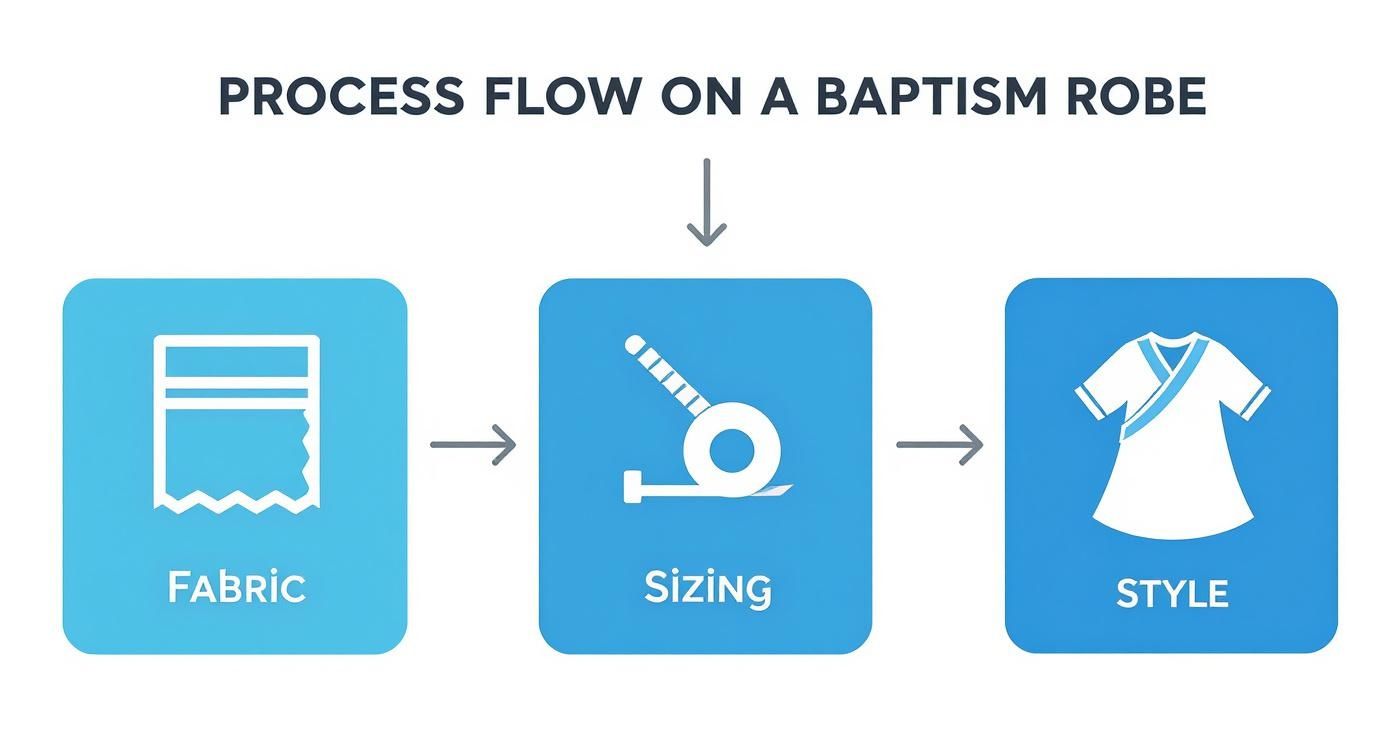
As the infographic shows, a successful choice balances the deep symbolism of the ceremony with practical needs like fabric and proper fit.
The Triple Immersion and New Garments
This is the absolute climax of the Greek Orthodox Christening. The priest takes the child and fully immerses them in the blessed water three times, in the name of the Father, the Son, and the Holy Spirit. This dramatic act symbolizes the death of the old self and a resurrection into new, eternal life. In this moment, the font represents both a tomb and a womb.
The newly baptized child is immediately received into the arms of the godparent, who wraps them in a new white sheet. They are then dressed in their pure white religious robe, a beautiful symbol of their cleansed soul and their new life clothed in the light and righteousness of Christ.
The priest, or pastor, also wears specific pastor baptism vestments that reflect the solemnity of their role in administering this holy sacrament. You can learn more about the significance of this attire in our guide explaining what a pastor wears for a baptism.
The Orthodox Christian faith has a significant global presence. Today, there are an estimated 192 million Orthodox Christians worldwide, with large communities in countries like Russia, Ukraine, Romania, and Greece.
Finally, the service concludes with the sacrament of Chrismation (anointing with Holy Myron), the cutting of the hair (Tonsure), and a joyous procession three times around the font. This beautiful, step-by-step journey celebrates and welcomes the newest member into a lifelong community of faith.
Frequently Asked Questions
What does the white baptism robe symbolize?
The white baptism robe, sometimes called a fotiko ("garment of light"), is a powerful symbol of purity. It represents the soul being washed clean from sin through the waters of baptism. Putting on the white religious robe signifies "putting on Christ"—adopting a new life of righteousness and light. This piece of baptism clothing is an outward sign of the inner spiritual rebirth that has just occurred.
Do adults need to wear special garments for baptism?
Yes, absolutely. An adult being baptized will wear an adult baptism gown, which is typically a simple, modest, and opaque white robe. This religious attire for adults carries the same symbolism of purity and new life as an infant's gown. It is especially important that the garment is designed for full immersion, ensuring dignity and comfort throughout the baptism ceremony traditions.
What size baptism robe should I buy?
Choosing the correct size ensures comfort and a reverent appearance. Most suppliers of baptism robes provide sizing charts based on height, which is the most accurate measurement for a full-length garment. If you're purchasing children’s baptism apparel, measure the child as close to the ceremony date as possible. When in doubt, it is always better to choose a slightly larger size to ensure a comfortable, graceful fit rather than one that is too snug.
Can baptism robes be reused?
Yes, they can. Many families treat baptism garments as cherished heirlooms, passing them down through generations, which adds a beautiful layer of family history to the sacrament. For churches that maintain a stock of robes, reusability is essential. That's why many are made from durable, easy-to-wash fabrics like polyester that are designed to withstand repeated use and laundering, ensuring they are always ready for the next baptism.
Where can churches purchase baptism robes in bulk?
Churches can purchase baptism robes in bulk from specialized suppliers of religious apparel. Buying in bulk is a cost-effective solution that allows a church to stock a full range of sizes, from Youth & Child Baptism Robes to various adult sizes. This ensures a consistent, dignified appearance for all baptismal candidates and means the church is always prepared to welcome new members. Many suppliers also offer specialized Clergy and Pastor Baptism Robes for church leaders.
At Baptism Robes, we understand just how important this sacred day is. We provide a wide selection of high-quality, comfortable, and dignified baptismal attire for children, adults, and clergy to help make every ceremony beautiful and reverent. Explore our collections and find the perfect garments for your needs.